Introduction
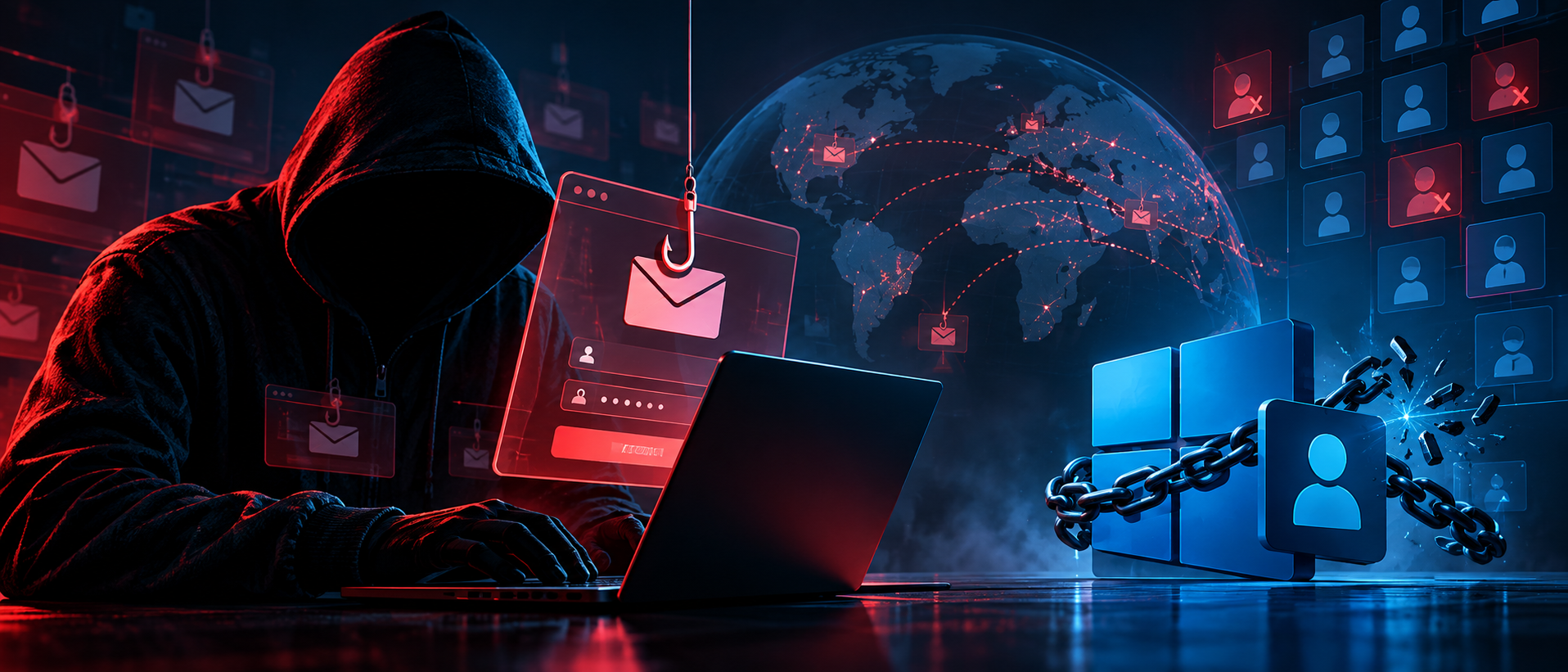
A coordinated takedown by Microsoft’s Digital Crimes Unit (DCU) has halted the EvilTokens phishing‑as‑a‑service (PhaaS) operation that breached more than 12,000 Microsoft accounts. The disruption follows a campaign that spanned thousands of organizations, highlighting the scale that commercial‑grade phishing services can achieve when left unchecked.
What Happened
EvilTokens operated a subscription‑based phishing platform, offering ready‑made credential‑stealing kits to paying customers. Over the course of the campaign, the service succeeded in compromising over 12,000 Microsoft accounts. Those accounts were distributed across more than 10,000 distinct organizations, indicating a low‑density but high‑breadth targeting approach. Microsoft’s DCU identified the infrastructure, engaged law‑enforcement partners, and executed a multi‑stage operation that rendered the PhaaS platform inoperable.
Technical Details
The EvilTokens service leveraged standard phishing tactics: spoofed Microsoft login pages, mass‑mail distribution, and credential harvesting scripts. Victims were lured via email that mimicked legitimate Microsoft communications, prompting them to enter their username and password on a cloned authentication portal. Once harvested, credentials were stored in the service’s backend database and made available to subscribers via an online dashboard.
Key technical observations include:
- Credential Capture Method: The phishing pages replicated Microsoft’s visual design and URL patterns, using TLS certificates to avoid browser warnings.
- Distribution Vector: Bulk email campaigns employed compromised or rented SMTP servers, allowing the attackers to reach a wide audience without immediate detection.
- Service Model: Subscribers accessed harvested credentials through a web portal, paying per‑batch or per‑credential, a model common to PhaaS operations.
- Infrastructure Takedown: Microsoft’s DCU traced command‑and‑control (C2) servers to a set of IP ranges, coordinated with hosting providers, and seized domain registrations, effectively cutting off the service’s data pipeline.
No CVE identifiers were associated with this incident, as the compromise stemmed from social engineering rather than a software vulnerability.
Who Is Affected
The breach impacted more than 12,000 individual Microsoft accounts. Because the accounts spanned over 10,000 organizations, the affected entities range from small businesses to large enterprises, educational institutions, and non‑profits. Any organization that relied on Microsoft accounts for email, collaboration, or identity management could have seen at least one user credential exposed.
While the public disclosure does not list specific victims, the breadth of the campaign suggests that the majority of compromised accounts were likely low‑privilege users—employees without administrative rights. Nevertheless, attackers can leverage even standard user credentials to conduct lateral movement, exfiltrate data, or deploy additional malware.
Why It Matters
The disruption of EvilTokens underscores several strategic concerns for security teams:
- Scale of PhaaS Threats: A single service can affect thousands of organizations without a single vulnerability being exploited. Traditional patch management does not mitigate this risk.
- Credential Reuse Risks: Compromised Microsoft credentials often serve as the gateway to other cloud services, especially when users apply the same password across platforms.
- Detection Gaps: Phishing pages that mimic legitimate Microsoft login flows can bypass many URL‑filtering solutions, emphasizing the need for behavioral analytics.
- Law‑Enforcement Collaboration: Microsoft’s ability to dismantle the platform demonstrates the value of proactive engagement with law‑enforcement and industry peers.
Exploitation/Attack Information
EvilTokens’ exploitation phase relied on convincing phishing emails and high‑fidelity login clones. Attackers did not need to discover a software flaw; instead, they exploited human factors—trust in Microsoft branding and the urgency conveyed in the messages. Once a victim entered credentials, the attacker gained immediate access to the associated Microsoft services. The harvested credentials were then sold or shared within the PhaaS ecosystem, enabling secondary attacks such as Business Email Compromise (BEC) or ransomware deployment.
The reported exploitation status confirms that the phishing campaign was active and successful prior to disruption. No evidence suggests that the platform employed additional malware payloads, but compromised accounts could be leveraged to deliver such payloads in subsequent stages.
Recommended Actions
Organizations should treat the EvilTokens incident as a reminder to harden account security across all Microsoft services. Immediate steps include:
- Force Password Reset: Require all users to change their Microsoft passwords, prioritizing accounts that have not been updated in the past 90 days.
- Enable Multi‑Factor Authentication (MFA): Enforce MFA for every user, preferably using authentication apps or hardware tokens rather than SMS.
- Monitor for Anomalous Sign‑Ins: Deploy conditional access policies that flag sign‑ins from unfamiliar locations, devices, or IP ranges.
- Review Account Activity Logs: Use Azure AD sign‑in logs to identify logins that occurred during the known compromise window.
- Educate End‑Users: Conduct targeted phishing awareness training that includes examples of Microsoft‑brand spoofing.
- Implement Zero‑Trust Principles: Limit the permissions of standard user accounts, ensuring that compromised credentials cannot access privileged resources.
Long‑term, integrate automated credential‑theft detection tools that analyze login patterns and employ machine‑learning models to spot phishing‑derived anomalies.
Conclusion
The takedown of the EvilTokens PhaaS platform removes a prolific source of Microsoft credential theft, but the incident leaves a clear lesson: phishing services can affect thousands of organizations without exploiting a single software flaw. Defensive strategies must therefore focus on credential hygiene, MFA enforcement, and continuous monitoring. By acting swiftly on the recommended mitigations, organizations can reduce the residual risk from any credentials that may have been exposed before the disruption.
Sources
- BleepingComputer: https://www.bleepingcomputer.com/news/security/eviltokens-phaas-disrupted-after-compromising-12-000-microsoft-accounts/